
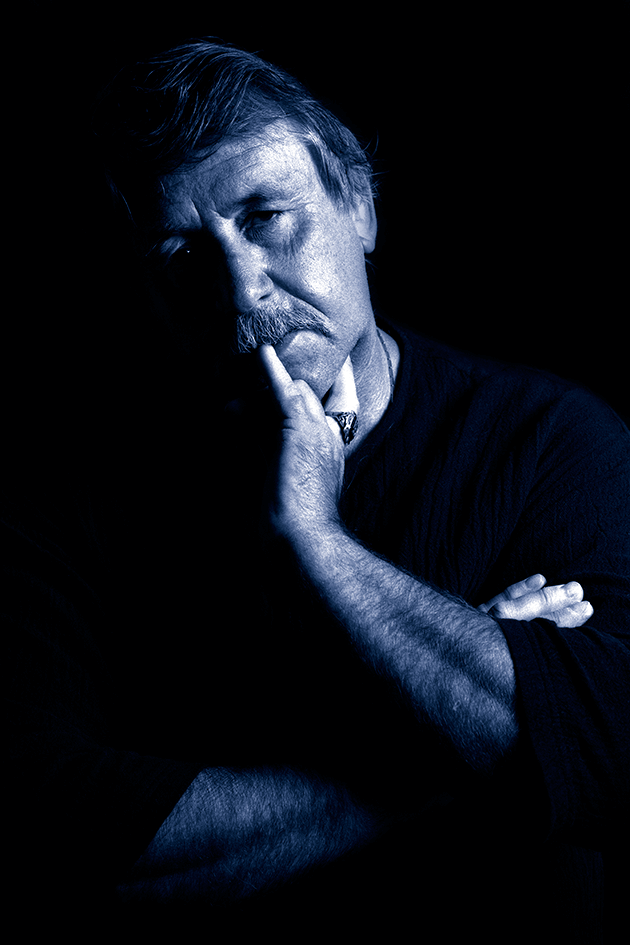
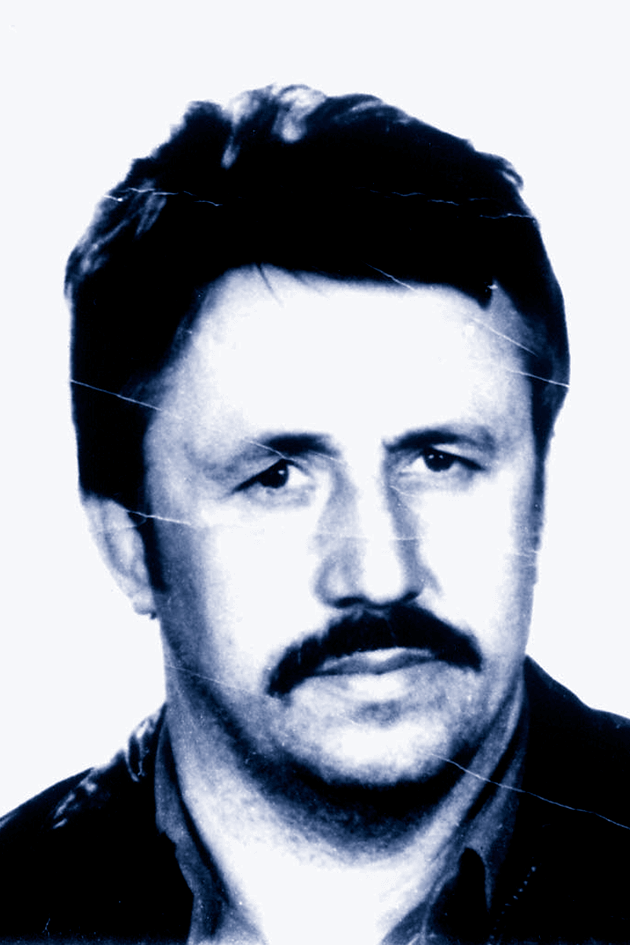
Bük János
Born 13 December 1938, Budapest. Before the Revolution he was an apprentice mechanic, then a member of the armed resistance group at Széna Square. In November 1956 he was arrested by the Soviets and deported to the Soviet Union for four months. After his return, he was kept in prison at Kistarcsa for six months. Later he worked as a marketeer and tradesman.
My grandfather was a tram driver. When he saw a piece of stone between two stops, he stopped, picked it up, put it down by his feet, and at the end of his shift carried it home in his rucksack to use it for building his small house. And they took that house away from him. This may be one of the reasons I fought as an armed revolutionary. When I was coming home after work leaving the Hungarian Optical Works, my co-workers told me "Well, Bütyök, you're a young guy, and there’s a riot, you should stay here as a factory guard." I stayed for two days, but my parents didn't know where I was. On the 25th I was walking toward Széna Square* when I walked into the guys from Óbuda. They told me to join them. That's how I went to Széna Square and got introduced to uncle Szabó** who told me:
"Son, this is no picnic. Think carefully before you decide to join us!"
I made the decision, and I was given a gun. They showed me how to use it. Then I put that gun down in a corner, went home to see my parents, and later returned. And I was with the Széna Square boys all the time until the 4th of November.
Then a Russian lorry came along; we were herded into it and taken to Ócsa. We were surrounded by Russian soldiers. We were taken to be interrogated one by one in a military truck, where the Hungarian militia was interpreting. Then we were herded into stockcars out on the open track, and we were taken to Ungvár***. There we were given total body shavesand our clothing was disinfected. Interrogations were going on all day and all night. We were kept in the city jail. Then a few of us were taken to the Polish border where things went on as before. For a while we were housed with the Russian soldiers who had deserted and joined the revolution. We had tea, gristly cucumber soup and cabbage soup, for breakfast, we were given herring, with one cigarette and two sugar cubes for each of us. I traded the cigarettes for sugar cubes, as I did not smoke, and
the only way I could eat the fish was by having half a sugar cube with each bite
. Some found the fish very disgusting. They even got hepatitis from eating it. The fish were kept in large wooden tubs, layered with unrefined salt; a basket of fish, then salt again. By that time the news was reaching the UN about young people being taken to the USSR, so thanks to the UN pressure we were smuggled back home. We were not brought home, but actually smuggled, because by that time it was known internationally that children were being taken. I must have been seventeen years old.
* : Széna Square was a stronghold of the armed revolutionaries in Buda. They used the temporary buildings erected for the construction of the subway for accommodation. The square is in a strategic location, next to Moszkva Square, a large public transport hub, as well as Castle Hill and the Buda Hills.
** : János Szabó ("Uncle Szabó") was the commander of the civilian revolutionaries in Széna Square. He was among the first to be executed after the Revolution was crushed.
*** : Ungvár is the largest city in the western part of Ukraine, not far from the Hungarian border.