
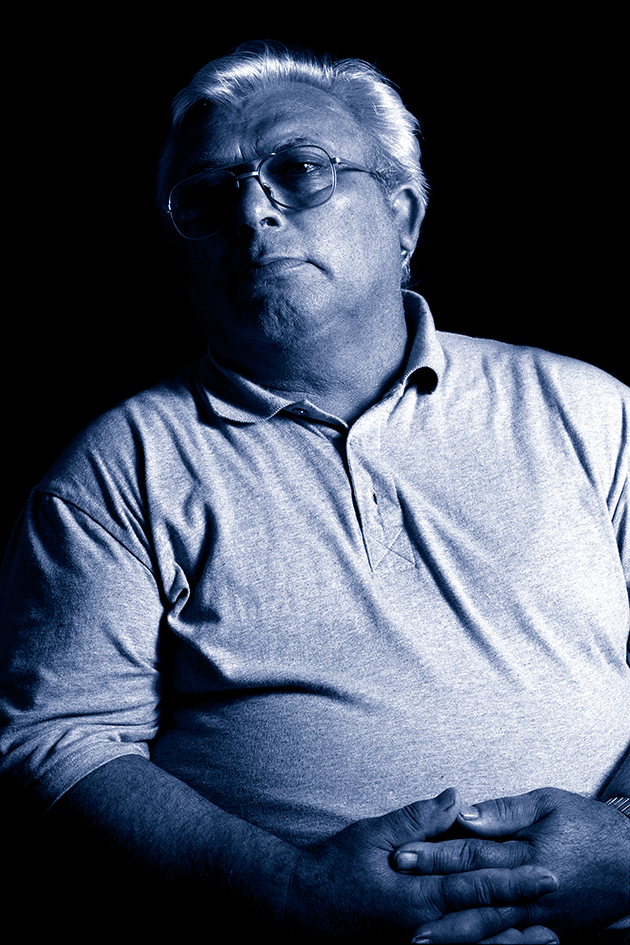
Dobrosi Lajos
Born 28 December 1934, Derecske. During the Revolution he was a battery commander in the Esztergom Artillery Battallion that engaged in artillery combat with the Soviet Army at the so-called Juta Hill in Budapest. He was arrested in November 1957 and was sentenced to death; the Appeals Court approved the death sentence. He was on death row for 150 days. Finally, he was granted a pardon by the Presidential Council. His sentence was reduced to life imprisonment. He was released in 1970 and worked as a carpenter in a mine.
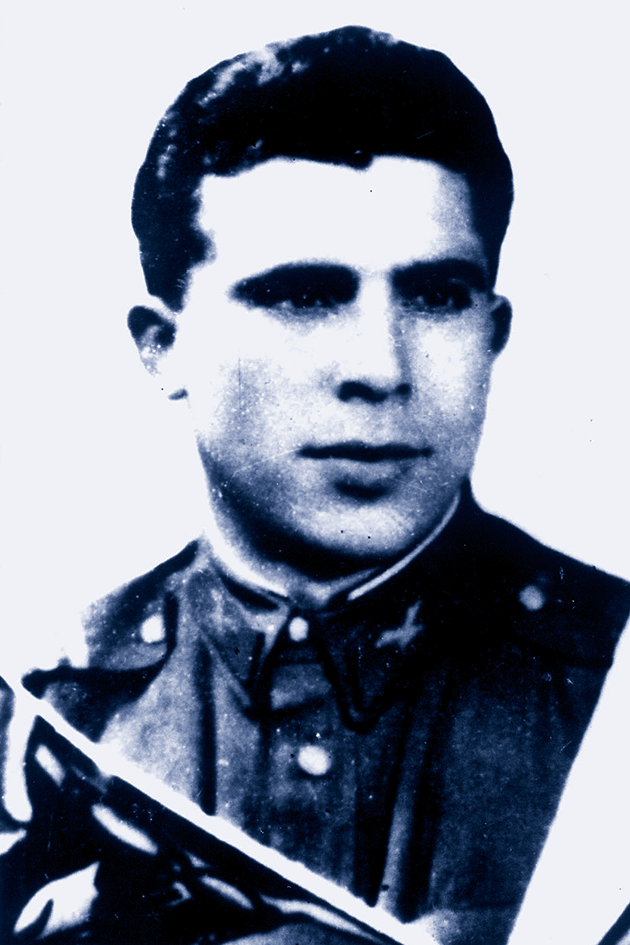
I joined the army on November 1, 1954 in Esztergom. I was assigned to serve in the anti-aircraft artillery division No. 6723. I became an artillery squad commander of the 37-millimeter light anti-aircraft automatic cannon. The cannon was operated by a crew of six. Operator No. 1 turns the gun to the right and aims. Operator No. 2 turns the gun upward and downward and aims. Operator No. 3 positions and keeps the gunsight always according to the target. Operator No. 4 loads the gun. Operator No. 5 handles the ammunition supply for the cannon and operator No. 6 is the one who takes the ammunition out of the case. The cannons that we used were Russian-type cannons left behind from World War II. We completed the practice firing for the battle in Diósjenő and in Nagyoroszi – and our artillery squad was excellent. We were firing at both airplanes and tanks. When firing at a tank, we always had to aim at the caterpillar belt because the bullet could crush that, but it could not go through the armor. Our life in the army was strict and disciplined. Our commanding officer was Major Pál Szabó; my supervising commander was Lieutenant Gyula Hernádi, and my battery commander was First Lieutenant János Kicska. There were six guns in a battery. We would have been discharged on November 1, 1956. On October 23 we already had our civilian clothes in the barracks. I was on duty at night, as a deputy officer on regiment duty, when I received an order from Lieutenant-Colonel Deák who was the chief of the signal corps in the division that I had to have the whole regiment lined up on the alert-drill grounds in four minutes. I went into the barracks and yelled,
"Alert!". Everybody ran down to the drill grounds in full marching gear and mounted the guns up on the trailers.
We were assigned to march on to Budapest because a revolution broke out there.
We were taken up to the Juta Hill* on the 2nd and nothing happened until the 4th. There was a sand pit between the ice factory and the jute factory, and we put up our firing position there. We had two light and two middle weight cannons. The two middle weight cannons were facing Határ út, and we gave them support from the side. There was a whole bunch of civilians with automatic rifles and machine guns. When the Russians marched in on the morning of the 4th, the civilians fired first. We started shooting only after the Russians already opened fire at us. They came with tanks, with Katyushas and with ZILs. I was at the gun when the Russian column appeared. When they started shooting in our direction,
the commander screamed, "Fire!". I passed on the order to my squad. Our squad shot down a tank and a Katyusha**, and that stopped the Russian column – they could not move further
– so, they turned around and left. The whole thing did not take longer than five minutes.
My fiancée and I set November 18, 1957 for the date of our wedding. They came for me in the evening, interrupting the wedding and said they were going to take me to Budapest for an interrogation. I was in fact interrogated for 13 years.
* : Juta Hill is at the border of Budapest, the highway approaching the city from the south passes by it.
** : Katyusha was the nickname of rocket launchers mounted on trucks.