
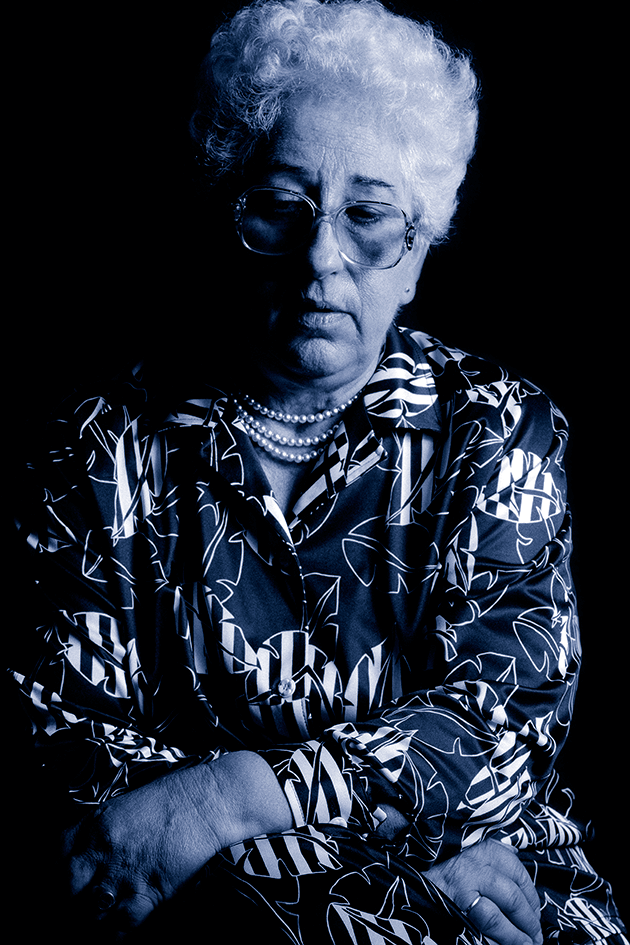
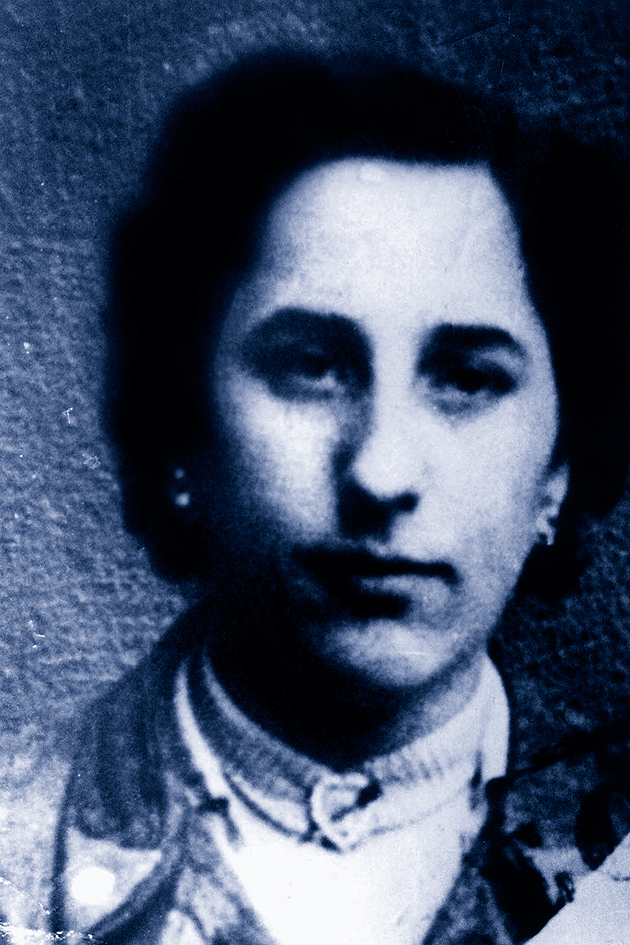
Márton Erzsébet
Born 24 June 1937, Budapest. Before the Revolution she was a tram conductor, then a member of the Széna Square armed revolutionary group, and the arresting officer of the communist György Marosán. She herself was arrested in the summer of 1957 and sentenced to death. She spent 120 days on death row. At the appeal hearing her sentence was reduced to fifteen years in prison. She was released in 1963.
On october 26, 1956 my mother and I went down to Széna Square, because that was the place where we always did our shopping, and when I had time I helped her bring home the groceries. But by then there was a crowd in the construction building of the subway, and also outside, along the sides of Moszkva Square – people everywhere, young, middle-aged, and the elderly. Then I said to my mother that I would like to go there and see what was happening.
She said: "Alright, sweetheart, go there and take a look. I’m going home now and I wait for you there. I'll cook something by the time you get home."
So, as I was walking and looking around like the other people in the street, a man in a leather coat and riding boots came up to me. He said: "Hey, little girl, what are you doing here?" I answered that we were at the market and I saw all these people here and came here to see what was going on. He said: "We need a smart girl just like you. We have a lot of things you could help us with." And later it turned out – because by then he introduced himself – his name was János Szabó, the commander of Széna Square. He told me to stay, because there were things to do in the kitchen, and there were other errands to be done, as well. So, I stayed on there without any further ado.
We told Marosán* to come with us, because we had to take him in – and then he was just laughing that we did not even look what was behind the painting on the wall, and yet there were all the guns there, his shotguns, too. It was so interesting to see that this powerful and influential man, who wanted to have the whole country under his control, was standing there in front of me, in front of this young girl, and complying with my instructions to come with us submissively and without any resistance at all. This seemed very strange to me then and has remained with me as a remarkable memory up to this day. I thought he would at least start yelling at me or slap my face, possibly saying: "What do you want here, you little snot!" So, we took him in; he was interrogated and released the next day. He even asked somebody there what that thing had been about, that one day we took him in and the next day we let him go.
Actually, there was this particular procedure, scenario and method to taking somebody in. For them to live through this feeling that some strangers could break down one’s own door and take one in any time – that was even more horrifying than the tortures.
I could not say how many people – but the number is close to a hundred – were taken away and hanged during those four months.
And the most terrible thing in it was that they could take away somebody and that person might be innocent. And the deed could never be rectified because you cannot raise anybody from the dead. That is why a cold chill runs through my spine whenever somebody talks about restoring the death penalty. Because you might never know what tiniest thing you are unaware of that could have saved a person.
* : György Marosán (1908-1992) was a communist party official at the time.