
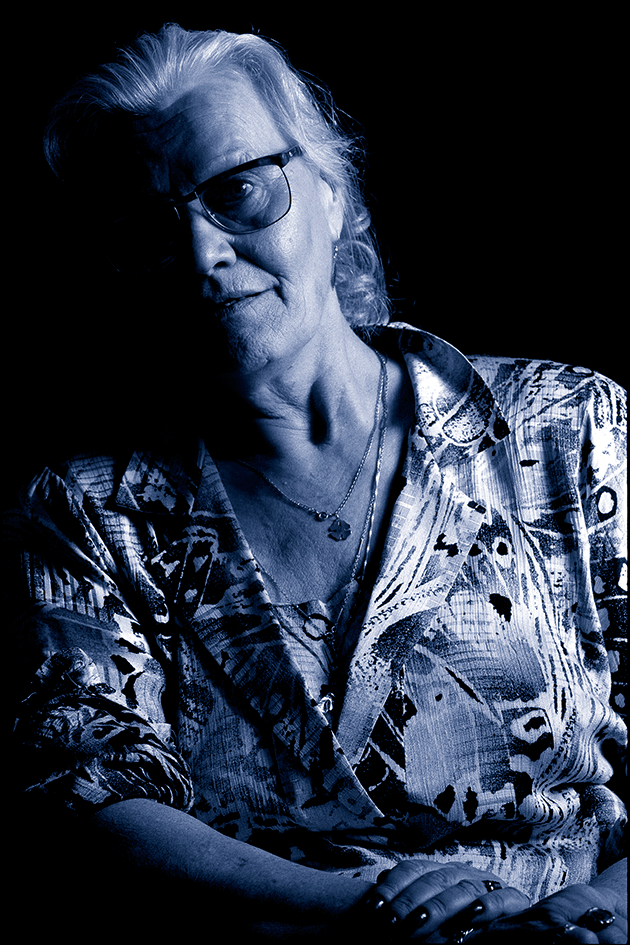
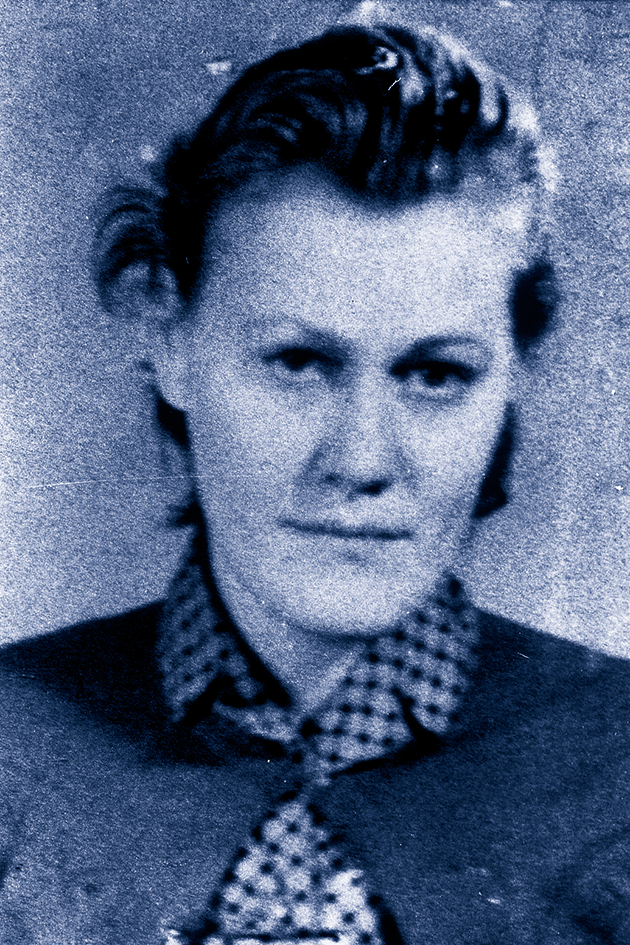
Sebestyén Mariann
Born 28 February 1935, Budapest. During the Revolution she worked as a nurse at the Korányi Hospital and was lightly wounded. She was arrested at the beginning of 1957 and sentenced to two years and eight months in prison; this prison term was reduced to fourteen months on appeal. She was released in 1958 and later worked as a waitress and supporting actress.
I ran out to the middle of the boulevard for the wounded man, lay under him and started crawling towards the pavement. I said to myself how lucky I was as I had a piece of wood under my belly. I could roll on it nicely, making it easier to carry the wounded man.
Suddenly, the boys were running up to me, taking the injured fellow off me and screaming "Run!".
I jumped up and after taking a few steps I looked back and saw "the piece of wood" explode. It was a hand grenade and I must have armed it by actually rolling on it.
I was appointed to a group, there were two of us from the Red Cross; the other girl was also called Mari. But she was short, while I was 177 cm tall, so I got the nickname "Tall Mari". Actually, saving lives was very hard physical labour, especially when I was told about a casualty. For example, there was no time to corner someone and say, "Hey, come along, help me carry some wounded". Sadly, it often happened that when I reached someone I had to say to myself that he was finished, practically dead – those people with stomach wounds, their guts hanging to the ground. I knew I could not help them; they would have died the moment I moved them. We got medicine and equipment from the Red Cross. I had a zipper bag with everything I needed: bandages, iodine, petroleum, wound ointment, tweezers, gauze cutter, disinfectant, compression bandages, splints, and sterile cotton wool. I still have that gauze cutter today. One time one of the wounded was lying on the stretcher and he told me, "Nurse, it's bleeding!" I gave him a good talking to and told him he should be ashamed of himself. Then he said "I didn't mean my wound; your hand is bleeding." Then I saw the clotted blood and the hole.
I hadn't even noticed that I was apparently hit by a bullet. I took the bullet out myself. Since I was a vain person I didn't want to have a scar. So I did not use a scalpel.
I froze the wound nicely, then reached in with the longer pair of tweezers and pulled out the bullet. Then I poured a lot of ointment into the wound, pressed it together and applied a compression bandage. That was it.
On the 5th of November, the Russians shelled the shelter at 10 Tompa Street by putting the turret gun of the tank through the window. The steel door flew open and I had to escape to the basement. There was billowing smoke; I could smell the explosives from the shell. I was handed a baby and told to rush her to a hospital. Her father died when the shell exploded. He was protecting the child in his lap with his body. I took the infant out in the yard and over to the Bakáts Square Clinic. She was six or seven months old then; today she is a young woman. Astonishingly, she still has a shell fragment in her skull.