
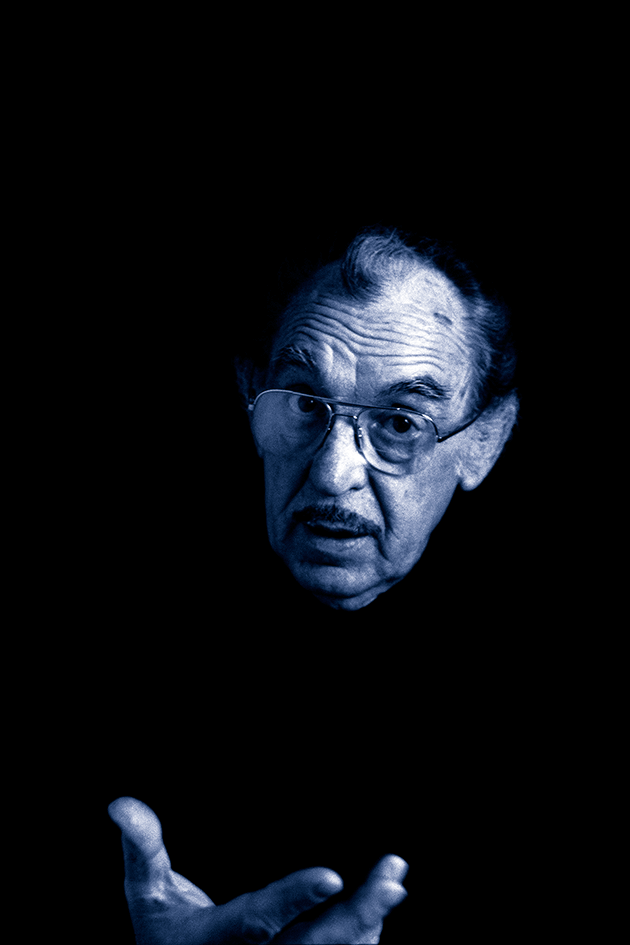
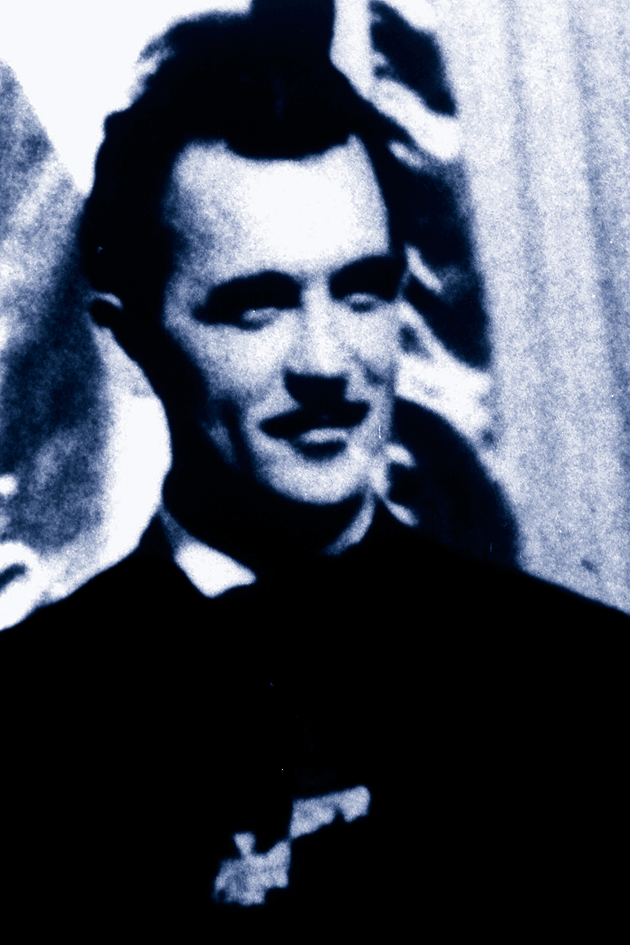
Bocskay T. József
Born 25 March 1925, Napkor. Before the Revolution he was a political prisoner, working as a miner. During the Revolution he came to Budapest with other miners from the Tatabánya region and participated in the fighting. After the Revolution was crushed, he fled the country. In the United States he became a restaurant owner; his restaurant specialized in Hungarian food.
People started to whisper in the morning of the 25th that there would be a silent demonstration in Tatabánya in front of the military school. A friend, Sanyi Repke, and I were walking before the crowd. In the meantime a car arrived from Budapest and university students got out. They recited poetry and gave rousing speeches. Then a flat-bed truck came along. A civilian was driving it, with a lieutenant sitting next to him. The truck was full of weapons, which they wanted to use to arm the faithful communist miners around Tatabánya. The weapons were distributed among the people; the lieutenant fled. Someone had the idea that we should go to the Town Command Post. It was a little peasant dwelling. "The Town Commander should come out!", we shouted. He did not. "Throw your guns out!" They did not.
Two fellows and I jumped into the garden, where there were only a captain and a chief lieutenant. They only had pistols. Well, where to now?
Let's go to the police! Somebody said that the cells at police headquarters were filled with revolutionaries. So we went there, and the police did not resist at all. They said "Send a committee in, you'll see there are nothing but criminals in this building!" And that was how it happened. We took a few guns from there as well. Then somebody said we did not do it right; we should have gone to the Division. There was a so-called Division in every larger town – that was where the ÁVO was located. About twelve hundred of us must have gone to that building. Of course, it was a more solid one than the one in the village. When we told him we would charge the building if he did not let us in, the sergeant standing at the gate opened it and said, "Go ahead, don't mind me!" There was not a single officer in the building. "Where are the keys to the weapons store?" we asked. There were sergeants, sergeant majors there, and they said they did not know; they hadn’t received any. But we did find the key after all. There were so many guns there, anyone who wanted one could have one. We occupied the building and decided we would go the Chairman of the Council. We saw him; he promised everything. He was trying to pacify the people. Then someone said we should go to the barracks. Originally, we had asked the Chairman for trucks to go to Pest, so we could aid Pest. And he answered that he did not have any trucks to give.
There was a yellow Pobeda* parked there, with a driver in it. "Whose car is that?", I asked. "It's the chairman's." So I said: "It once was!"
A few of us got in the car and set off for the barracks. There were no officers there either, but we got a hold of the keys to the garage and the armoury. They had no trucks. So we went to the Ikarusz Bus Company. The urban buses had a depot there. So in the end we did get sixteen Ikarusz** buses and four trucks. We set off for Budapest.
* : The Pobeda was a passenger car made in the USSR, the luxury vehicle of the fifties in Hungary.
** : Ikarusz was a brand of buses manufactured in Hungary.