
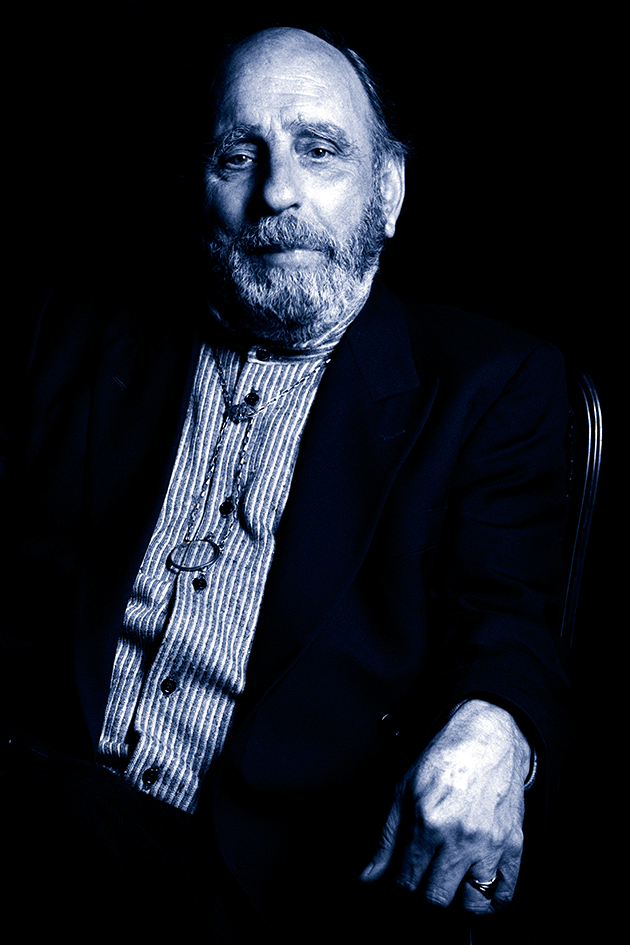
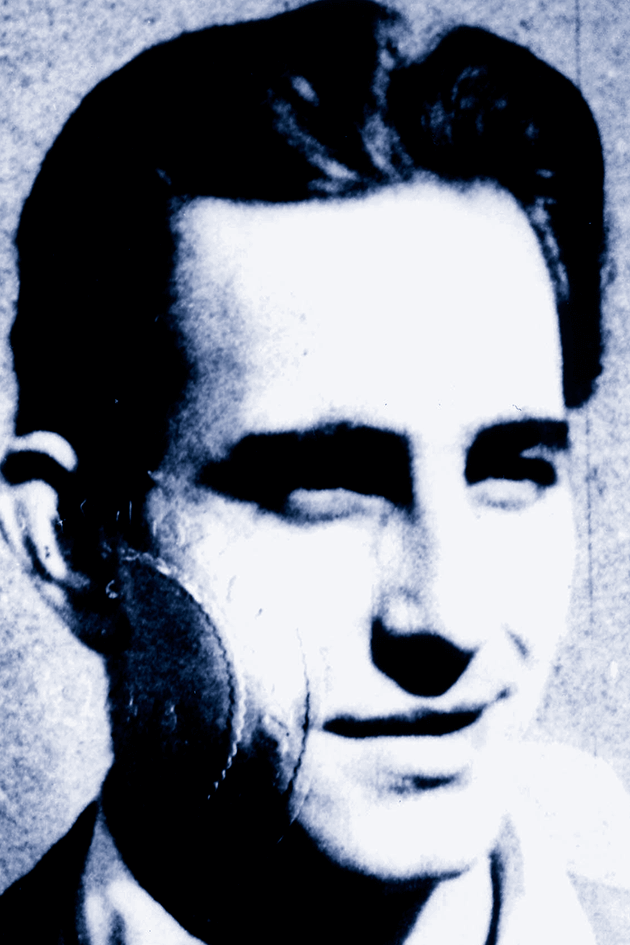
Obersovszky Gyula
Born 1 January 1927, Pécs. During the Revolution he started publishing the newspaper Truth and was its editor-in-chief. After the Revolution was crushed he went underground and produced illegal publications. He was arrested in December 1956 and sentenced to three years in prison; his prison term became a death sentence on appeal. He spent 30 days on death row. The Presidential Council pardonned him and reduced his sentence to life imprisonment. He was released in 1963 and later found work as a journalist.
I went to the Kossuth Printing House from Kossuth Square. Because something was bound to happen or might happen there where the printing shop was. They could have known that I was coming. The printing machines were idle because there was not one expert around to dictate the text, to read the wording or to announce the twelve points. I managed to get into the case room and the following was written on one of the first flyers that got into my hand: "What does the Hungarian nation want?" I dictated the text right into the typesetting machine. Then I broke away from the crowd the next day because a flash of genius came over me when I thought that if there was a place where there was such a huge crowd assembled and such an intense encounter between truth, justice and the people has occured, the press must definitely be there. For what's all this worth if it did not have a press that sprouted from the heart? So, I crashed the New York Palace* and drew up what was my editorial then and there in a matter of minutes.
After that I went over to the printing house through the flap door on the third floor, and dug out ten-point pica-type lead letters from the garbage, out of which – what a miracle! – the exact word "TRUTH" materialized and nothing else.
This was the most essential thing that the Hungarian people wanted! And that paper became the first free and independent voice of the whole communist world. I still have a copy – that an engineer couple hid for 34 years in a cavity drilled into one of the legs of a kitchen table. Their two daughters ate at that very table for decades, and they had no idea it was there all this time.
After the Russians came in, the paper was killed. They were already offended by the title itself. I was not able to put up with that. And once everything – and I mean everything – got out of whack, and there was simply nothing else you could do, unless you joined the camp of the barkers, the dogs on chains – which I already hated from the bottom of my heart – it was then when I created the prototype of samizdat, the newspaper titled "WE ARE ALIVE". It was an illegal paper that came to existence and circulated under very trying circumstances, but it possessed such influence that we were able to organize the silent protest and the Women's demonstration. On December 6th – which is the Day of St. Nicholas in Hungary – I went home after midnight to see my children because a very long time passed since I last saw them. It was then when they picked me up.
You can only thank and praise every conceivable God for having had such experiences! I consider it an enormous privilege, and a great grace by Fate that I had the opportunity to live through something like that. By no means do I want to imply that it was pleasant when you heard their steps and had no idea whether it was you they were coming for and you could hear the banging and clattering when they put up the gallows at dawn and that was how you woke up for months and months at end. When my sentence was decreased to a life sentence, the chasers were just gaping because we were on cloud nine – well, so much about what relative happiness is.
Imre Nagy** became a truly great man upon his death. And I usually say that with reference to myself as well.
The fact that somebody should end up under the gallows in a time so rotten and damned – this was really the truth – is to be expected. It is only natural. Because where else is one supposed to end up?
* : The New York Palace” was one of the central venues frequented by journalists, with a café area on the ground floor; to editors' offices of daily newspapers upstairs.
** : Imre Nagy was the Hungarian Prime Minister during the Revolution. As a former communist functionary, he led a successful but ultimately tragic life by having held the position of Minister of Interior Affairs in 1945 to having become a prime minister. He was proscuted in a court of law after the Revolution. The court sentenced him to death in 1958, and he was hanged.