
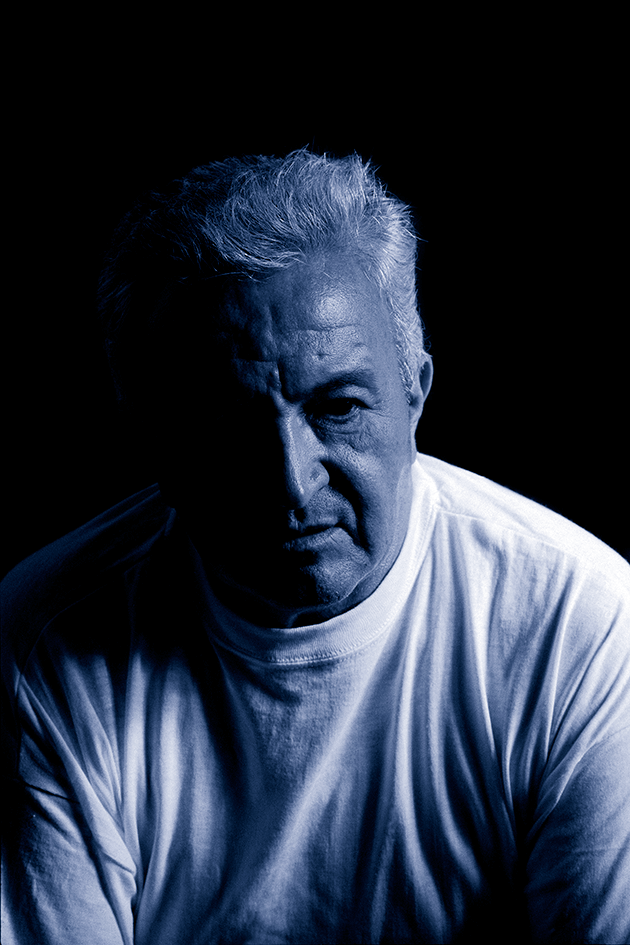
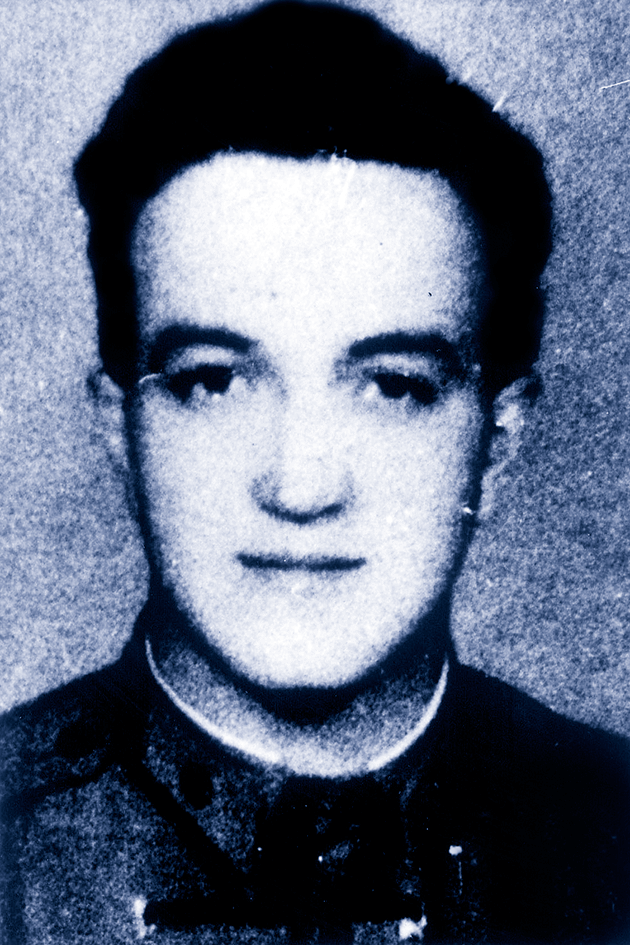
Puchert János
Born 2 August 1937, Komló. During the Revolution, he served as a serviceman with the Esztergom Mobile Artillery Regiment; he also participated in a skirmish with Soviet units at the so-called Juta Hill in Budapest. He was arrested in the summer of 1957 and sentenced to death, he spent 130 days on death row. His sentence was affirmed at the appeal hearing, but later the Presidential Council pardoned him and reduced the sentence to life imprisonment. He was released in 1970 and worked as a mine fitter.
When we reached the top of Juta Hill we dug their beds. The middleweight guns went parallel to the road. And we were positioned at an angle perpendicular to the road. I had a machine gun which I had gotten from the Russians on Jászai Mari Square – and I ended up shooting with it at those who had given it to me. I made a tent for myself because it was already getting very cold in those days.
I put dry stalks of weed on top of the heap to cover it, but they still pumped a round into it later.
One of the army comrades of mine, a clerk, was the one who was feeding the ammunition for me, and the others were at the guns. Then one day, at dawn, a Russian marching column crossed our way. I learned only later that that was the unit the Russians wanted to use to whisk Maléter – who was already captured – out of the country with the help of the Hungarian Secret Service. When they came to our sight, the guns started firing at them. I cannot say that I was given an order to fire because I was neither within hearing distance, nor could I see the one who was giving the orders. I automatically started shooting because they were firing at me. Afterwards several tank and truck wrecks remained on the road. Those vehicles that could turn around did flee. There was an area full of reed nearby, so some of them jumped off the cars and went in to hide there. At the order of my battery commander I also went down to the reed bed and aimlessly fired a few shots because you could not see anything.
After I was discharged I went back to work. I worked in Komló. We heard that our commanders stayed in the army, although we also expected to a certain extent that we were going to be called to account for what we had done. When they came to pick me up, they were nice to me, showed me their badges and the search warrant.
They did not intensely search the house. When I left with them, I had no idea I was going to be away for 12 years.
The first lieutenant even reminded me in a friendly way to say goodbye to my parents. I remember this happened in October 1957, and we were also talking about the launch of the first spaceship.
The trial at the lower court took place between July 22 and August 14, 1958. There were 52 defendants, all of them former soldiers, mostly privates. The prosecutor asked for 17 death sentences because in his opinion that was the number of Soviet soldiers who died there at the Juta Hill. Fortunately, the lower court issued only 11 death sentences, and altogether 364 years to be served in prison. These years in prison were distributed among the defendants. I sat next to our former commander Mecséri during the trial. He always acted like a real comrade; even at the end of his life, he still cared deeply for his soldiers. At the trial there were soldiers serving as volunteer guards to escort us. They could hear what the whole thing was about. One of the platoon leaders even said: "If I had joined the army two years earlier, it could have happened that I would be sitting here among you."